CODE-H monitoring system

Water level, waves and remote monitoring

CODE-H monitoring system
Purpose

Water level, waves and remote monitoring

CODE-H measures sea level and wave parameters for marine engineering and provides information to services responsible for maritime safety. The system combines automated stations, communications, power supply, a data collection server and user software.

The stations automate observations at remote locations and extend the monitoring network. Users view data in tables, charts and maps, adjust station settings remotely and export CSV files. Fixed, autonomous and mobile versions are available.

PriceOn request
Manufacturing lead timeOn request
Parameters

Technical
specifications

Final configuration and operating conditions are agreed in the technical specification.

ParameterValue
Operating temperature−40…+50 °C
Radar sensor accuracy±3 mm
Submersible sensor accuracy10 mm
External unit power supply7–58 V DC
Autonomous unit power supply2 × CR123, up to 1 year
Communication channelsGSM, LoRaWAN, Iridium, UHF, Wi-Fi, Ethernet
Station power supply220 V mains, batteries or solar panels
Backup power14–60 days
Display and exportTables, charts, map; CSV
FunctionsAlerts, remote configuration, access permissions
ExpansionWeather sensors, currents, water quality, cameras
ServerCustomer-site installation possible

Radar and submersible sensors are alternative options. Endurance depends on the selected configuration and measurement schedule.

Level stations

CODE-H automated water-level stations

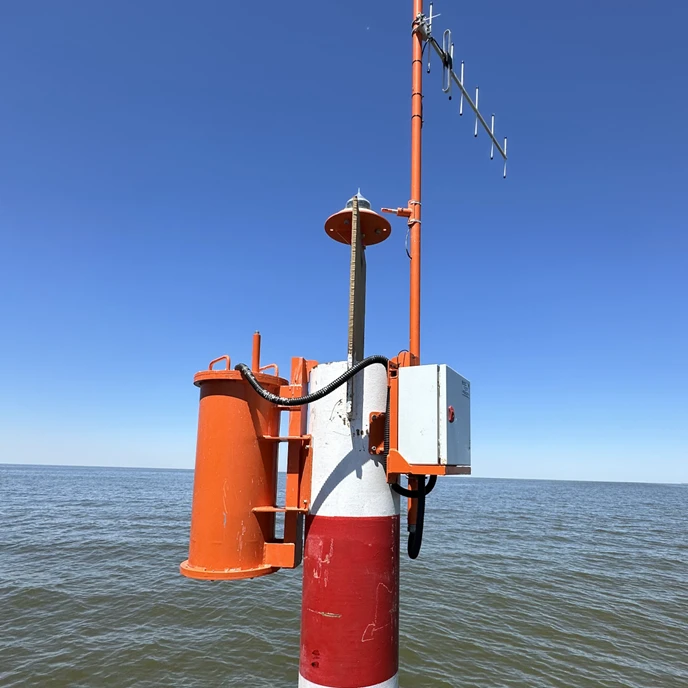
A station continuously measures the water surface level. The mounting and power scheme is chosen for the site: fixed, autonomous or mobile versions.

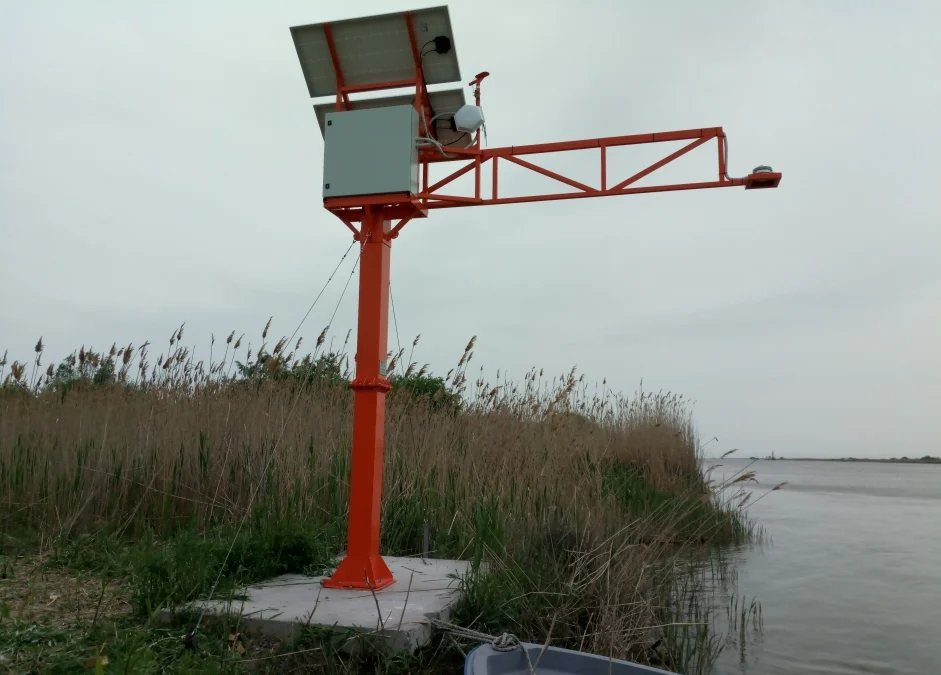
CODE-H autonomous level station at a remote site
Remote site

CODE-H autonomous level station

Autonomous power system, backup radio channel, vandal-resistant design, installation on a concrete slab. The station structure was designed and manufactured by Amaringo after a site survey.

  • Radar level sensor
  • Controller
  • GSM modem (primary channel)
  • VHF radio modem (backup channel)
  • Batteries and autonomous power system
  • Access to the monitoring and control server data
CODE-H level station with 220 V supply
Site with mains power

CODE-H level station with 220 V supply

Primary power from 220 V mains, backup autonomous power system, GSM communication channel.

  • Radar level sensor
  • Controller
  • GSM modem (primary channel)
  • Batteries and autonomous power system
  • Access to the monitoring and control server data
System components

What CODE-H consists of

Level stations and weather stations

Stations with radar or submersible level sensors, data-processing units, communications and power units, including autonomous units with renewable energy sources of our own manufacture. Automated weather stations, including precipitation amount and intensity gauges.

Monitoring and control server

Developed in-house. Data collection and processing, tables, charts and maps, alerts on abnormal events, a maintenance log with photos and video, reports and access permissions. Hosted on Amaringo servers or on the customer side.

User software

  • Continuous monitoring of all stations with alerts on critical values
  • SMS notifications when a defined event occurs
  • Web client with an interactive map and, where cameras are connected, live photo and video
  • Mobile clients for phones and tablets
  • Audible and visual warning devices

When critical thresholds are exceeded, autonomous stations automatically switch to continuous measurement.

Data

What a station transmits

  • Station ID, date and time of measurement
  • Level, m
  • Presence of 220 V mains power
  • Battery and solar panel voltage
  • Enclosure state: open or closed
  • Installation coordinates
  • Data channel and measurement interval
  • Service parameters

The measurement interval and installation height can be changed remotely. The level sensor holds a measuring-instrument type approval certificate and supports remote verification. Sensors are manufactured in Russia and hold Russian measuring-instrument certificates.

Expansion

What can be connected

  • Current velocity meters
  • Water contamination sensors
  • Snow depth sensors
  • Soil temperature sensors at the surface and at depth
  • Total solar radiation sensors
  • Radiation level sensors
  • Sensors for hazardous and toxic substances and hydrocarbon gases in air
  • Emergency call devices for remote areas

Existing level stations from other manufacturers can also be connected: their data is combined in a single user environment.

Applications

From task
to operation.

Marine engineering operations

Monitoring water level and conditions in the work area.

Flood-risk areas

Increasing station density and providing alerts for defined events.

Implemented project

CODE-H level stations support safe navigation on the Volga–Caspian Sea Shipping Canal. Level stations from other manufacturers have also been migrated to the CODE-H system.

Questions and answers

CODE-H in brief

What is CODE-H?

CODE-H is a water-level and wave monitoring system developed by Amaringo LLC (St Petersburg, Russia). It combines automated water-level stations, communication links, power supply, a data collection server and user software: a web client with a map, mobile clients and SMS alerts.

How accurately does CODE-H measure water level?

The radar level sensor has an accuracy of ±3 mm and the submersible sensor 10 mm. They are alternative options chosen to suit the site. The sensors are made in Russia, hold measuring-instrument type approval and support remote verification.

Can a level station work without mains power?

Yes. The autonomous station is powered by solar panels and batteries, with 14–60 days of backup depending on configuration. The monitoring unit can run on two CR123 cells for up to one year. For sites with mains power there is a 220 V station with a backup autonomous power system.

Which communication channels does a station use?

GSM, LoRaWAN, Iridium, UHF, Wi-Fi and Ethernet are supported. A typical autonomous station uses a GSM modem as the main channel and a VHF radio modem as backup.

What is the operating temperature range?

The operating temperature is −40 to +50 °C.

Can third-party stations and additional sensors be connected?

Yes. Existing level stations from other manufacturers can be transferred into CODE-H, and their data appear in the same user space. Stations also accept weather sensors, current meters, water-quality sensors, snow-depth, soil-temperature and solar-radiation sensors, cameras and other equipment.

Where is the server hosted and how is the data presented?

The monitoring and control server is Amaringo's own development. It can be hosted by Amaringo or installed on the customer's side. Data are available as tables, charts and on a map, with CSV export, alerts on abnormal events, a maintenance log, reports and access rights.

Where is CODE-H already in operation?

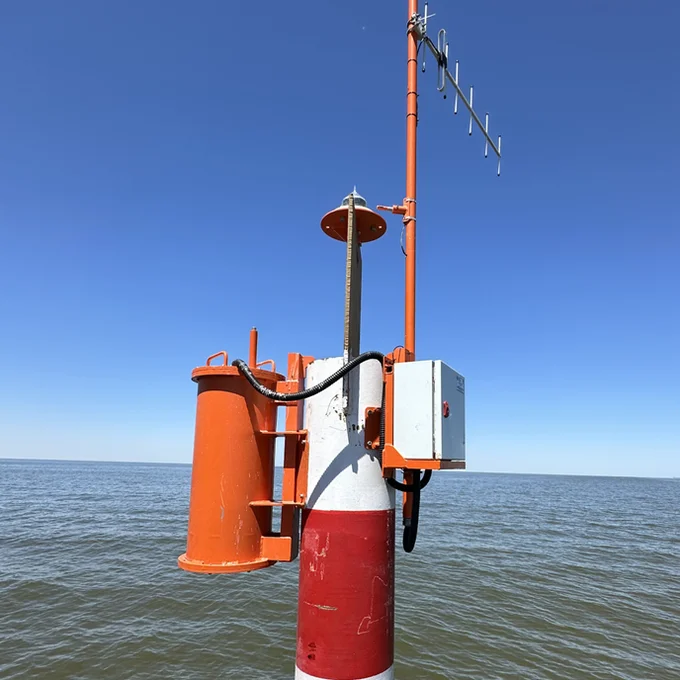
CODE-H level stations support safe navigation on the Volga–Caspian Sea Shipping Canal. Stations are installed on berths, on piles in the water area, on uninhabited islands and on offshore platforms.

How much does CODE-H cost and what is the lead time?

Price and lead time depend on the system configuration and site conditions and are defined by the technical specification. Send a request to info@amaringo.ru or call +7 (812) 426-09-62.